
School closes and the structure evaporates overnight. Fixed meal times, tiffin boxes, and the natural rhythm of the school day, all gone. What fills the gap is usually grazing, packaged convenience food, and cold drinks. By week three, most parents notice the same pattern: a tired, irritable child who never seems full but has been snacking constantly.
This isn't a parenting failure. It is a predictable nutritional consequence of unstructured time and it has a straightforward fix. This post covers the three things that go wrong nutritionally during Indian summer vacations, and exactly what to do about each one.
The Three Things That Go Wrong
1. Meal timing collapses
During the school year, children eat at predictable intervals. Hunger is met at roughly the same times each day. During vacation, wake times shift, meals merge, and the gap between eating occasions stretches or becomes unpredictable. Children who miss breakfast graze on whatever is accessible, usually packaged snacks and arrive at lunch with suppressed appetites from high-sodium, high-sugar snacking.
The result is a child who has technically been eating all morning but arrives at the dinner table genuinely undernourished, too many empty calories, not enough protein, fibre, or micronutrients.
2. Hydration drops sharply
Summer heat increases a child's daily fluid requirement by 20–30% above normal but without the school water bottle routine, most children simply forget to drink. Mild dehydration in children presents as fatigue, headache, and irritability symptoms that are almost universally misattributed to heat or boredom.
To make it worse, many parents compensate with packaged fruit juice and cold drinks, both of which worsen dehydration because of their high sugar content. Fructose-rich drinks draw water into the gut as part of the digestive process, temporarily increasing fluid demand rather than satisfying it.
3. Junk food becomes the path of least resistance
With no tiffin to pack and the child at home all day, packaged snacks fill every hunger gap. Maida biscuits, fried chips, instant noodles, flavoured milk, juice boxes; these are easy to hand over and require no preparation. Each individual occasion seems harmless. Across 60 days of summer vacation, the cumulative nutritional deficit is significant.
Research from the Indian Journal of Pediatrics consistently shows that children's dietary quality drops measurably during school holidays — with increased intake of free sugars, sodium, and refined carbohydrates, and decreased intake of protein, fibre, and micronutrients.
The Summer Swap Guide
The goal is not to eliminate treats, it is to replace the default junk with options that are equally convenient and actually doing nutritional work:
|
What creeps in |
Why it's a problem |
Summer swap |
|
|
01 |
Packaged fruit juice / cold drinks |
18–26 g free sugar, zero fibre, instant blood sugar spike |
Nimbu pani with jaggery, aam panna, kokum water, plain lassi |
|
02 |
Ice cream as a daily treat |
High sugar + saturated fat; no protein; disrupts appetite for meals |
Frozen banana slices, homemade dahi popsicle with fruit |
|
03 |
Packaged chips and namkeen |
Refined starch, excess sodium, suppresses appetite for real food |
Millimo Millet puffs (whole grain base), roasted makhana, cucumber sticks |
|
04 |
Instant noodles at odd hours |
Maida base, high sodium, artificial flavour. zero nutrition |
Millimo Pancakes that are made with Millets and Multrigrains. |
|
05 |
Biscuits as the default snack |
Refined flour, maltodextrin, sugar aliases; no satiety |
Millimo millet cookies, whole fruit, roasted chana |
|
06 |
Sugary breakfast cereals |
GI 70–85, highly processed, cartoon-marketed to children |
Ragi porridge, whole oat upma, poha, egg paratha |
Hydration : The Most Underestimated Summer Problem
Children rarely report thirst accurately they report fatigue and irritability instead. By the time a child says they're thirsty, they are already mildly dehydrated. The solution is scheduled hydration, not reactive hydration.
|
Age group |
Daily fluid target |
Approx. glasses |
Best summer sources |
|
4–6 years |
1.2–1.4 L |
6–7 glasses |
Water, diluted aam panna, plain milk, coconut water |
|
7–9 years |
1.6–1.8 L |
8–9 glasses |
Water, nimbu pani (low sugar), buttermilk, coconut water |
|
10–12 years |
1.8–2.0 L |
9–10 glasses |
Water, coconut water, lassi, herbal sherbets (no artificial colour) |
Source: WHO Child Growth and Nutrition Guidelines; Indian Academy of Pediatrics summer health advisory.
-
Aam panna: raw mango + jaggery + cumin + water. Electrolyte-rich, cooling, extremely well-accepted by children. One of the best summer hydration drinks available in the Indian kitchen.
-
Coconut water: natural electrolytes (potassium, sodium, magnesium) with low sugar. Better than any commercial sports drink for active children in summer heat.
-
Plain buttermilk (chaas): hydrating, probiotic, cooling. A pinch of rock salt replaces sodium lost through sweat. Universally accepted by children aged 5 and above.
-
What to avoid: packaged fruit juice, cola, flavoured milk, energy drinks. All are high in sugar, some are caffeinated, and none hydrate as effectively as water or the options above.
|
Dehydration signal: Dark yellow or orange urine is the clearest indicator of dehydration in children. Pale yellow or clear = adequately hydrated. If your child's urine is consistently dark during summer and they are fatigued, increase fluids before attributing the symptoms to anything else. |
A Loose Summer Day Structure That Actually Works
You don't need a school-like schedule. You need anchor points, fixed meal times around which the rest of the day flows. Three meals at predictable times reduces grazing automatically, because the child knows food is coming and doesn't need to forage.
|
Time |
Meal / snack |
What works well |
|
8:00–9:00 am |
Breakfast |
Ragi porridge / egg paratha / whole oat upma + glass of milk or lassi |
|
11:00–11:30 am |
Mid-morning snack |
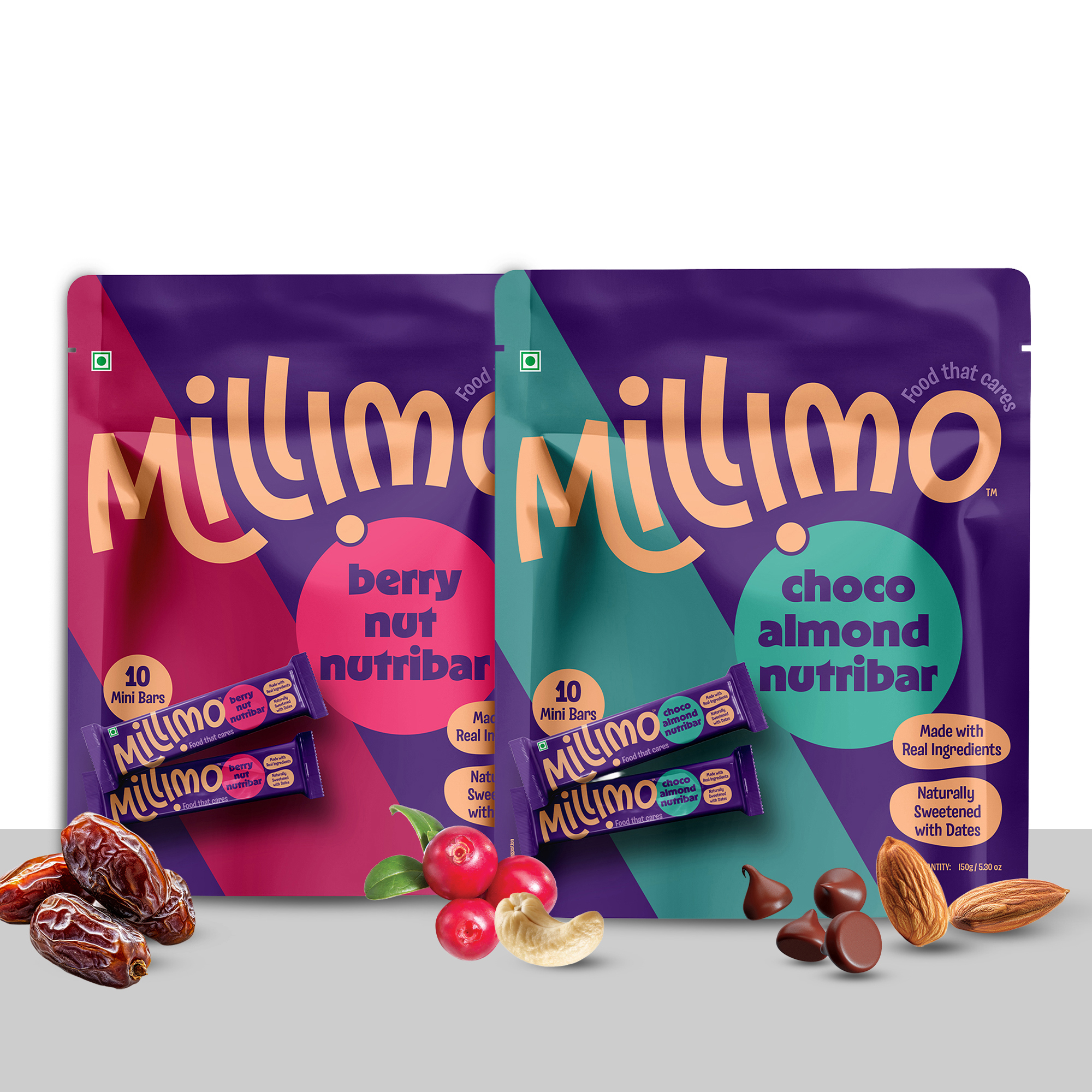
Whole fruit + Millimo Nutribar or millet cookie — no refrigeration needed |
|
1:30–2:00 pm |
Lunch |
Dal + roti or rice + sabzi + curd — full structured meal |
|
4:00–4:30 pm |
Afternoon snack |
Coconut water or nimbu pani + roasted chana / makhana / millet puffs |
|
7:30–8:00 pm |
Dinner |
Light — khichdi, dal soup, or sabzi roti — avoid heavy meals in summer heat |
|
Before bed |
Optional if hungry |
Small cup of plain warm milk; keeps overnight fast from going too long |
|
The snack shelf strategy: Keep a designated shelf in the kitchen stocked with go-to summer snacks that require zero preparation. Whole fruit, roasted chana, makhana, Millimo Nutribars, millet puffs. When the child is hungry between meals, they choose from the shelf. No negotiation, no separate preparation, no guilt. The shelf does the nutritional work passively. |
Three Summer-Specific Nutrition Points
Appetite drops in heat, don't force it
Core body temperature rises in summer, which naturally suppresses appetite as the body reduces metabolic heat production. Children eating less in peak heat (12–3 pm) is physiologically normal and not a cause for concern. Shift the caloric emphasis to breakfast and an early dinner when the body is cooler and appetite is naturally higher.
Cooling foods from the Indian kitchen
Traditional Indian summer foods like aam panna, kokum, sattu sharbat, curd, cucumber, watermelon, coconut water are not just cultural habits. They are thermodynamically and nutritionally appropriate for the season. Curd is cooling and probiotic. Sattu (roasted chana flour) is high protein and used in sherbets across Bihar and UP. Cucumber is 95% water. These are not supplements, they are summer nutrition built into the food tradition.
The activity-nutrition link
Summer vacation usually means more physical activity & outdoor play, sports camps, swimming. Active children need more protein and more fluid, not just more calories. A child who has been swimming for two hours needs a protein-containing snack within 30–45 minutes, curd with fruit, a peanut butter roti, or a Nutribar. Not a biscuit or juice box that provides calories without the protein needed for muscle recovery
.
Quick Answers
My child only wants cold drinks and ice cream. How do I manage this without constant conflict?
Don't eliminate, substitute and limit. One ice cream per day is fine; it's the three juice boxes and packet of chips alongside it that create the problem. Make the substitutes available and appealing: homemade dahi popsicles with mango, nimbu pani with jaggery and mint, frozen grapes. Children accept substitutes far more readily when they are cold, sweet, and presented without a lecture.
My child sleeps late and wakes up at 10 am in summer. How does this affect nutrition?
A late wake time compresses the eating window and makes it harder to fit adequate nutrition into the day. The practical fix: still serve breakfast within 30-45 minutes of waking regardless of the time, keep lunch at a consistent time (1:30-2 pm), and ensure the afternoon snack is protein-containing so dinner appetite isn't driven by depletion. The structure matters more than the clock time.
For educational purposes only. This article does not constitute medical or dietary advice.
© Millimo.in · millimo.in/blog